

Hello, World!
Tax planning often brings a knee-jerk reaction: “I don’t want to pay more taxes.” While understandable, that mindset can sometimes cost more over a lifetime.
More Room Than You May Think
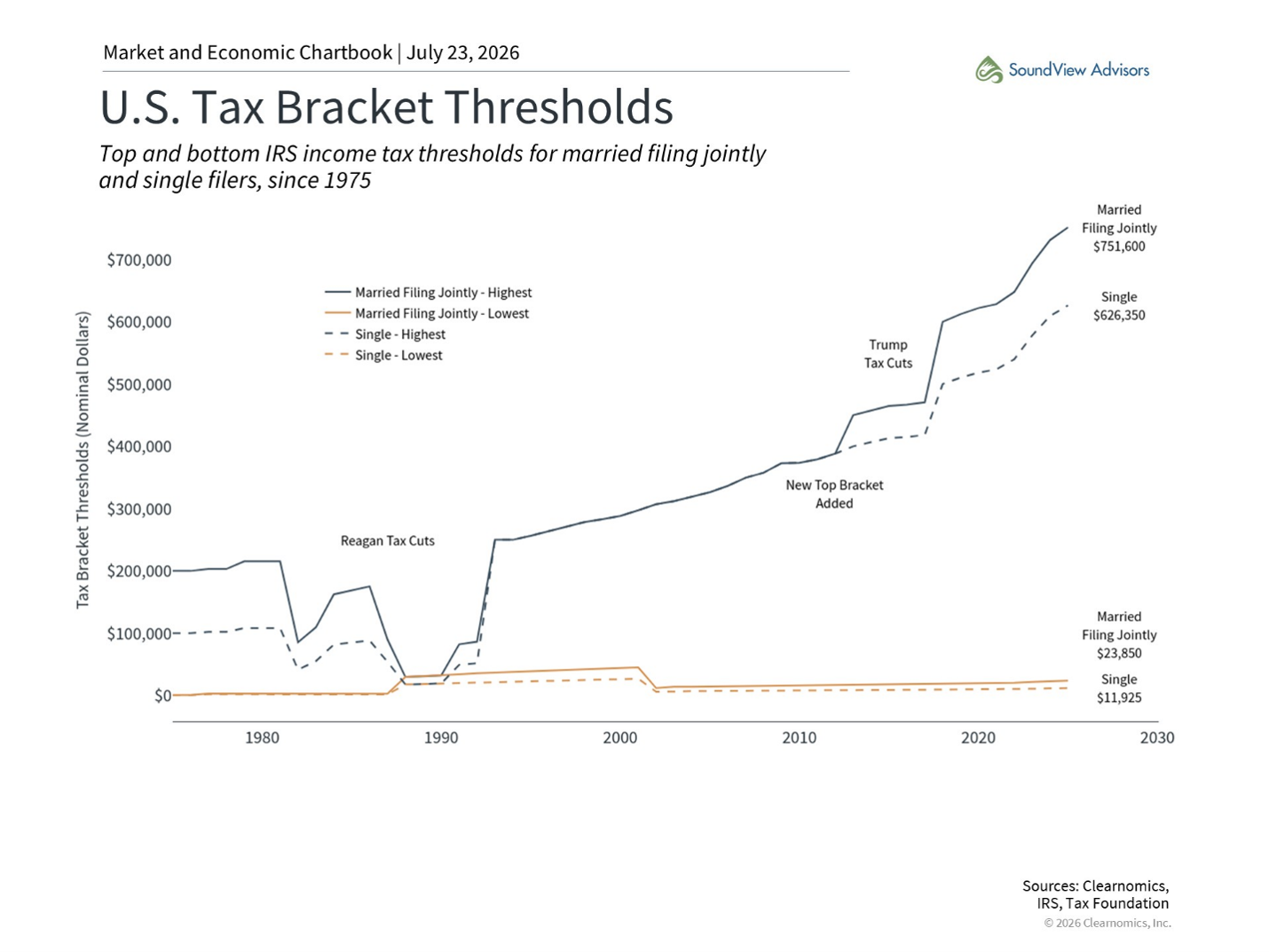
The first chart shows that income thresholds for today’s tax brackets have risen dramatically over time. Many retirees have room to recognize additional income without moving into a dramatically higher tax bracket. That creates opportunities for strategies such as Roth conversions, capital gain harvesting, and charitable giving.
Today’s Rates in Historical Context
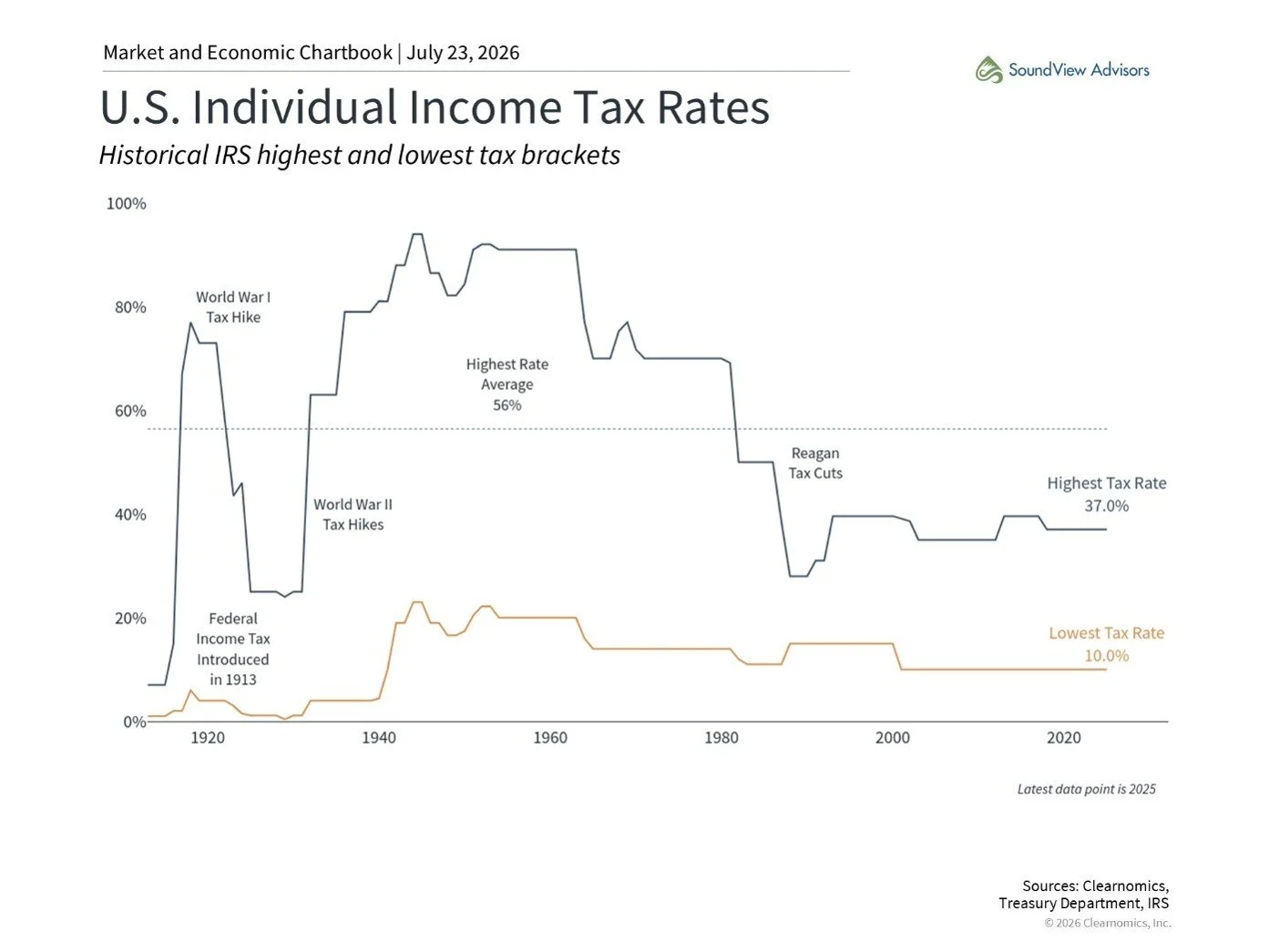
The second chart provides important context. Although today’s top federal income tax rate of 37% may feel high, it is well below the 56% historical average. For much of the last century, top marginal rates exceeded 50%, and for several decades they were above 70%.
Planning Across a Lifetime
None of us knows where tax policy will be ten or twenty years from now. Rather than focusing solely on minimizing this year’s tax bill, effective tax planning considers your lifetime tax liability.
Sometimes paying taxes strategically today can reduce the taxes you and your heirs pay over the long run.
This fall, we’ll revisit your tax strategy as part of your overall financial plan. We’ll evaluate opportunities to manage marginal tax rate risk alongside your cash flow, investment, estate, and charitable planning goals. We can’t predict future tax policy, but history reminds us that today’s rates are low by historical standards while today’s brackets are relatively wide. That combination creates planning opportunities that may not always exist.