

by Kevin Rigg, Director of Financial Life Planning, Lead Advisor, CFP®, CPA
Most people think retirement planning is primarily about saving and investing. Those things are certainly important, but which accounts you use can also have a meaningful impact on your long-term financial picture.
Different types of retirement accounts are taxed differently, which creates opportunities and tradeoffs both before and during retirement.
Benefits Arrive at Different Times
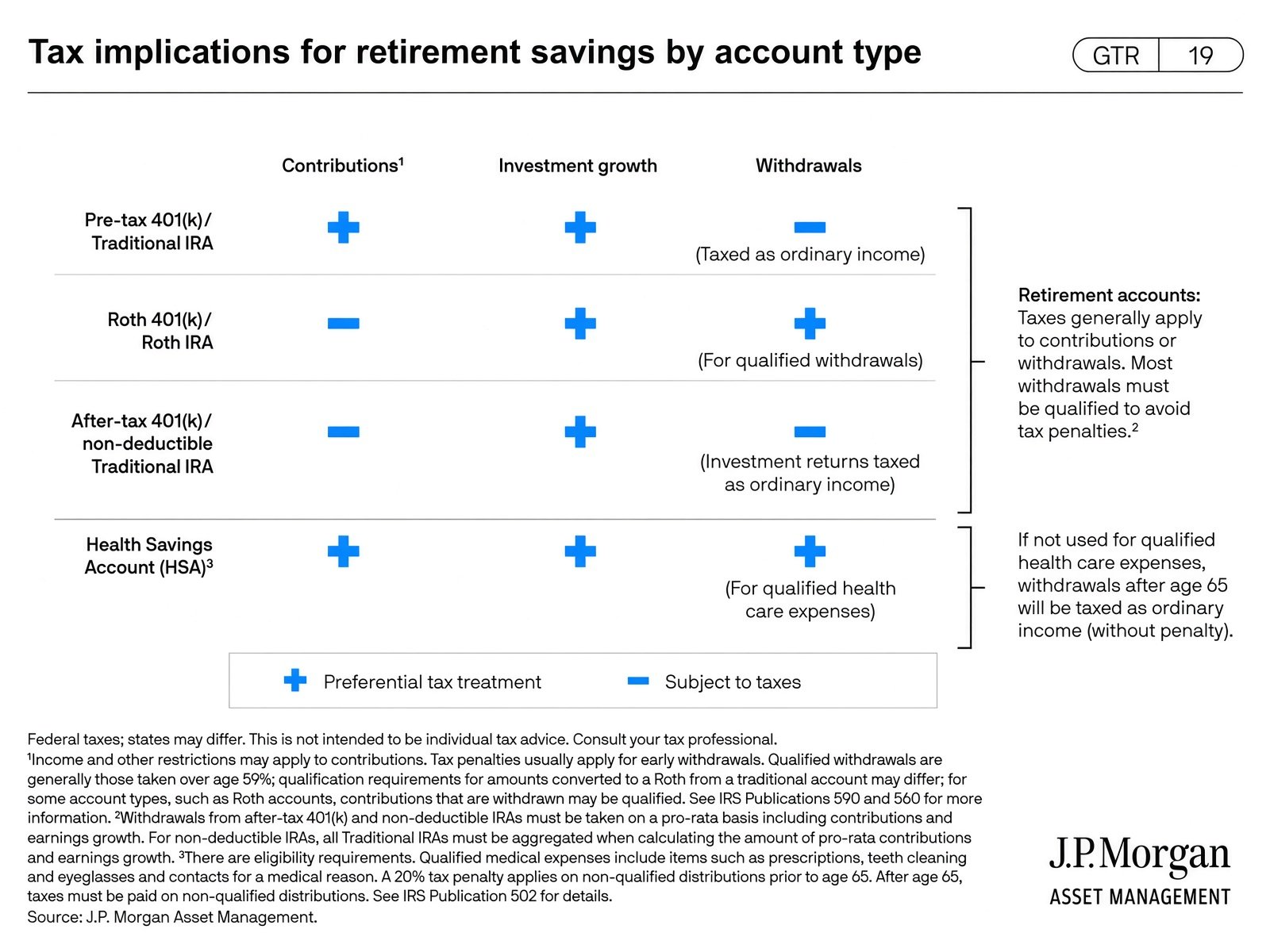
As the chart shows, some accounts provide tax benefits today, some when funds are withdrawn, and some potentially both. Whether you’re still building wealth or already taking retirement income, there isn’t a one-size-fits-all answer. The right mix of accounts depends on personal factors such as your tax situation, retirement goals, and legacy objectives.
Two Stages, Two Planning Questions
Still Working
We focus on where new savings are going and whether the allocation between pre-tax, Roth, and other account types makes sense.
In Retirement
We focus on how retirement income is being generated and whether withdrawals are coming from the most appropriate accounts, with the goal of minimizing taxes, managing expenses—including Medicare premiums—and maintaining overall flexibility.
A Strategy Built Around You
Whether you are still working or retired, we make recommendations based on an understanding of your specific situation rather than relying on generic rules of thumb.
The right mix of accounts depends on your tax situation, retirement goals, and legacy objectives.
This is why, at your upcoming Strategic Planning Meeting, we’ll review your current mix of retirement accounts, evaluate whether your savings and distribution strategy still makes sense, and identify opportunities to improve tax efficiency over time.