

by Kevin Slater, CEO, Lead Advisor, CFP®
Dear SVA,
The news talked about US Treasury rates for 15 seconds last night. Is that just another useless stat for econ geeks?
-Yours truly, a normal human being.
Dear Normal Human Being,
I am sorry to say but this is a stat that really matters. The US 10-year Treasury hit a 20 year high recently. Meaning the interest rate received by purchasing one is the highest it has been since March 2002 (over 5.28%!). Why does that matter?
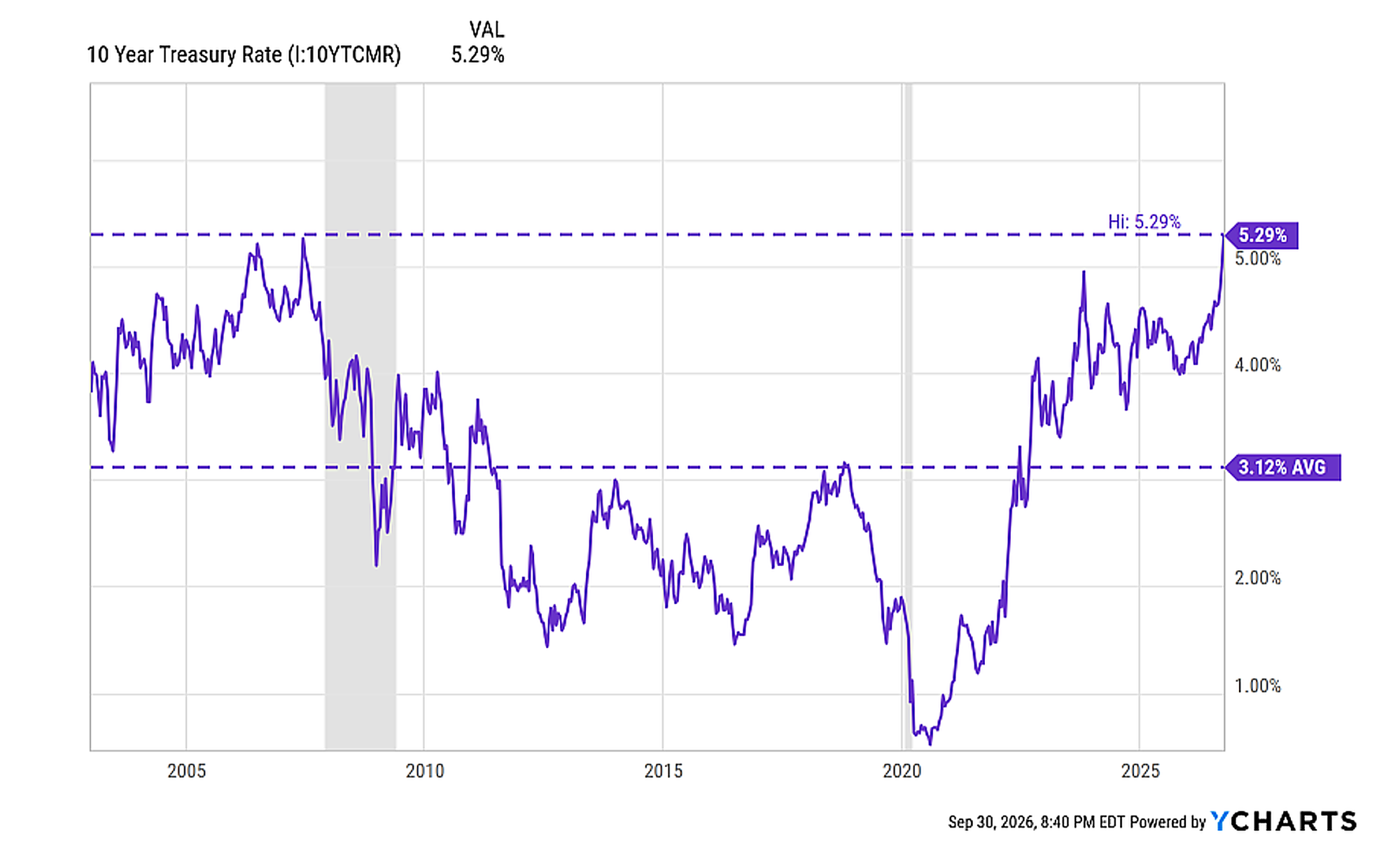
Lots of financial calculations which impact our daily lives are directly affected by the rate of the 10-year treasury. For example, mortgage rates, car loans, and insurance premiums to name a few.
The government does not set or control the 10-year rates, the marketplace does. While the Federal Reserve can adjust very short-term rates, the marketplace decides how much it is going to require to loan the government money for 10 years. There are several considerations that contribute to this change including persistent inflation, oil prices, government debt levels, and interest rates other quality borrowers are willing to pay.
In retrospect, it’s not surprising rates have risen, but how long it took for them to jump was surprising. It was also unexpected how far and quickly they rose. Those surprises lead to uncertainty about where they will go from here.
There is both bad news and good news for investors and consumers. On the bad side, values of your fixed income portfolio and real estate assets are falling. The bond values get reflected quickly; while real estate will take much longer to determine the net impact and will likely be more painful.
On the positive side, higher interest rates also mean higher income on new bond purchases and may decrease the cost of some insurance premiums. We will harvest losses where we can, use them to reduce taxable income, and reinvest for higher yield.
Sorry for the mixed news but glad we can help make the best of it.
-SVA